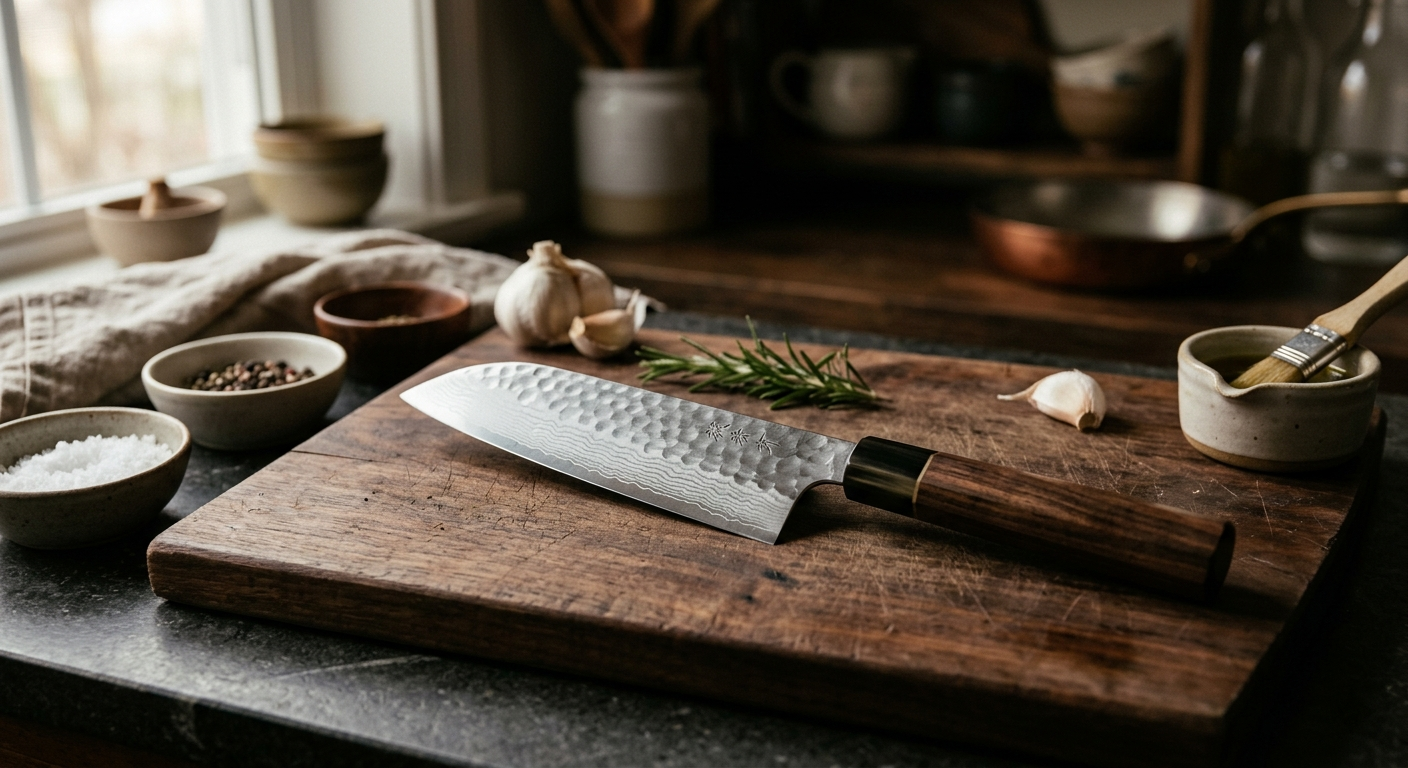
Basic Rules
These are the most important habits to follow if you want to keep your knife in good condition:
Avoid
- Do not put it in the dishwasher.
- Do not use it on bones or frozen foods.
- Do not cut on glass, granite, or metal surfaces.
Recommended
- Always wash it by hand.
- Dry it immediately after washing.
- Use a wood or plastic cutting board.
Cleaning
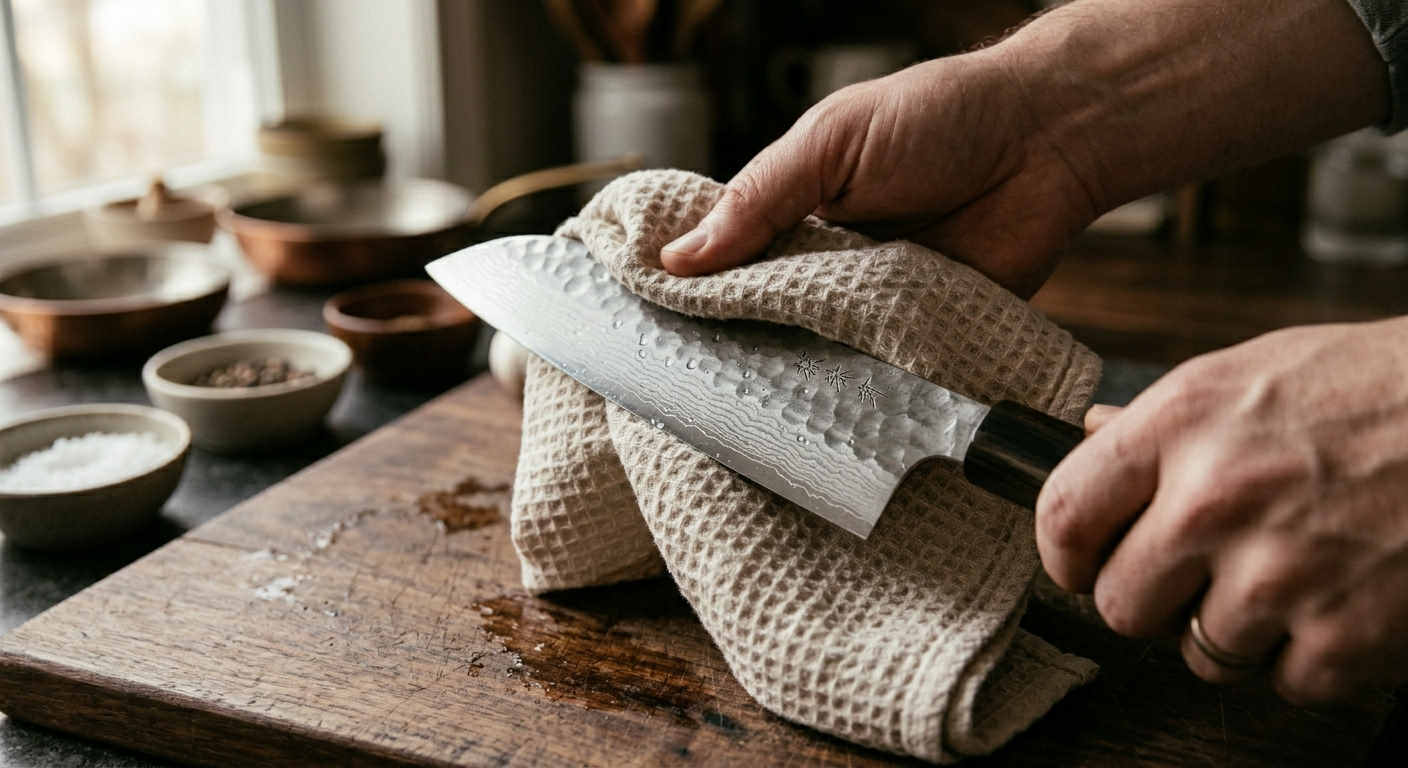
After using your knife, wash it by hand with warm water, mild soap, and a soft sponge. There is no need to leave it soaking in water.
Dry it right away with a clean, soft cloth before putting it away.
Storage
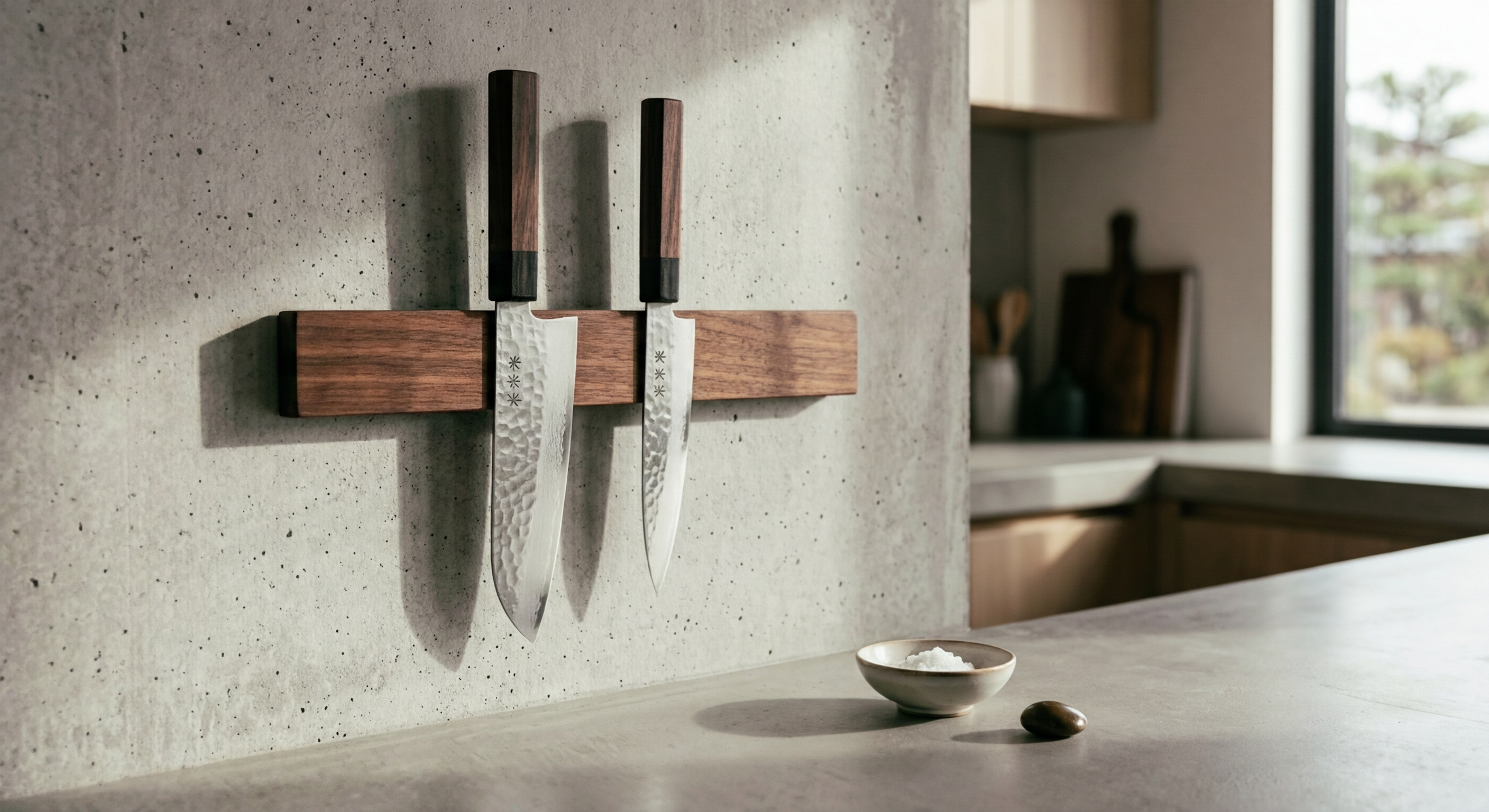
Proper storage is just as important as proper use. A sharp edge can be damaged easily if the knife is stored carelessly.
Good storage options include a blade guard, a proper magnetic strip, a knife block, or a protective sheath.
Care According to the Steel
If your knife is made of carbon steel, be extra careful to wash and dry it right away after use.
If your knife is stainless steel, maintenance is generally easier, but good cleaning and drying are still important.
In all cases, hand washing, immediate drying, and proper storage remain the best habits.
Sharpening
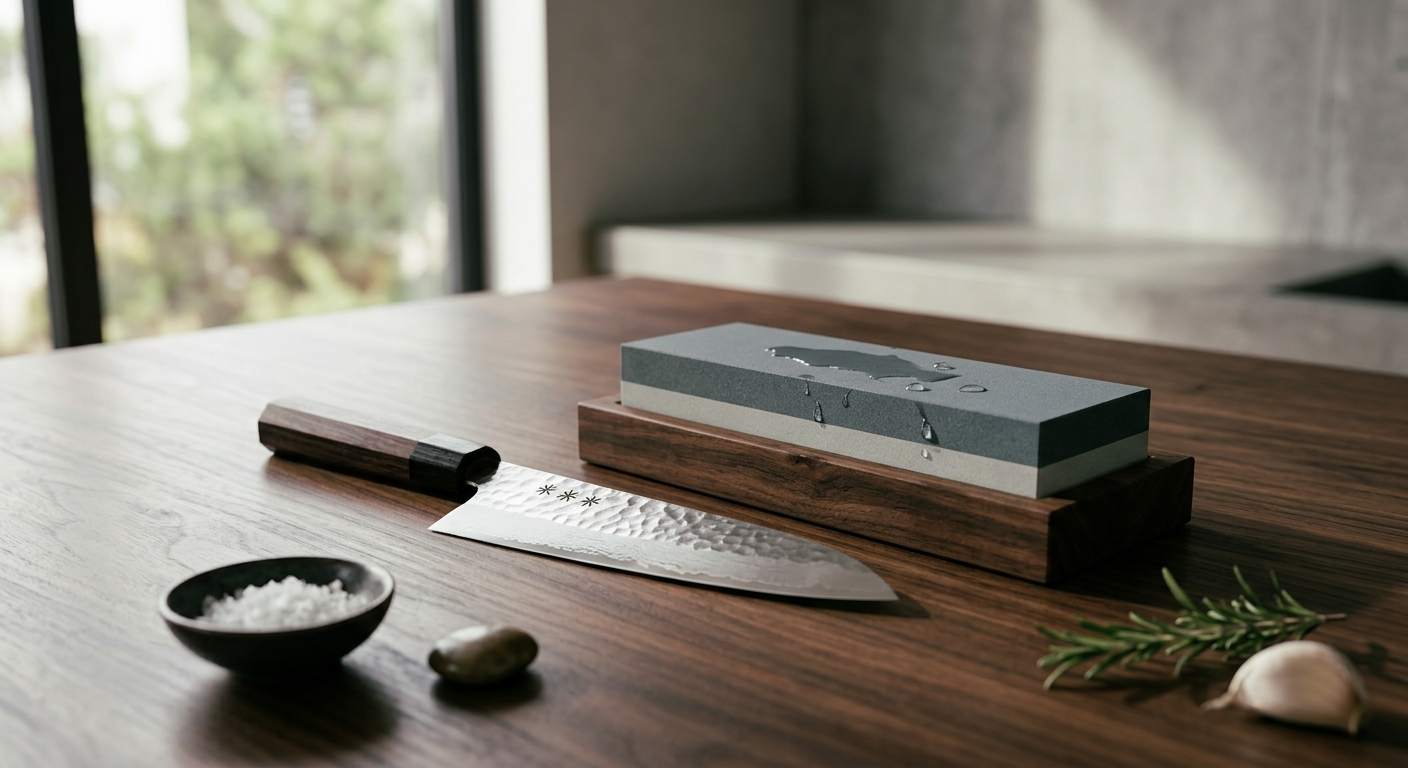
A properly sharpened knife is safer, more efficient, and more enjoyable to use. The best options are sharpening stones or a trusted sharpening service.
Maintenance Frequency
If you use the knife often, check the edge regularly.
If you use it occasionally, good cleaning, drying, and storage may be enough for long periods.
If the knife starts to feel dull, slips more easily, or requires extra force, it likely needs attention.
Good maintenance is not about waiting until the knife feels completely dull. It is about keeping performance consistent over time.
Final Thoughts
A good Japanese knife stands out not only because of its sharpness, but also because of the overall cutting experience it offers. With the right care, it can stay reliable, beautiful, and satisfying to use for a long time.